
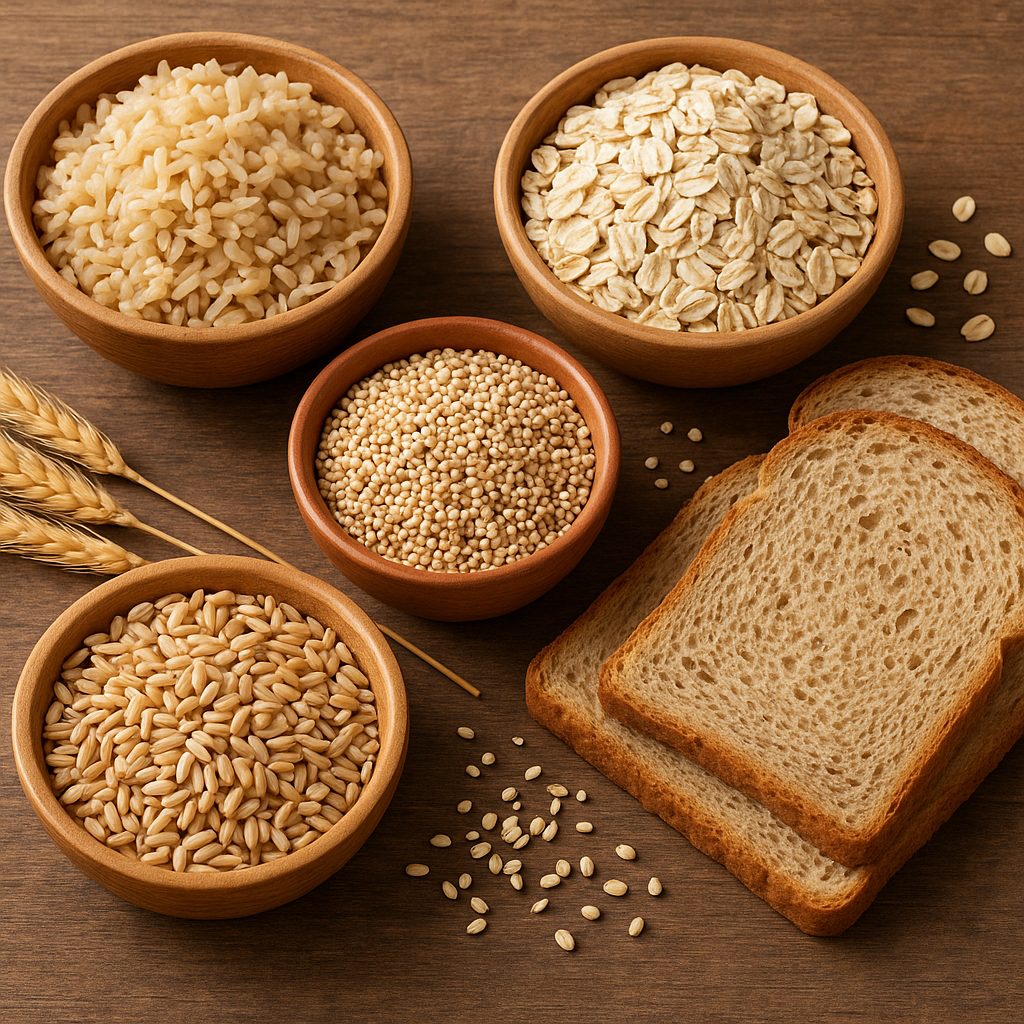
Fruits and veggies are the first things that come to mind when we think of eating healthy. But did you know that there is a group of foods that deserves just as much attention? Yes, we are talking about whole grains. Often overlooked, these simple grains are packed with nutrients that help our bodies grow strong, boost our energy levels and even prevent certain diseases.
So, what exactly are whole grains? Wheat, rice, and oats, which come from plants and keep all the three parts they are made up of: the bran (the outer layer), the germ (the nutrient-rich core), and the endosperm (the starchy middle) are known as whole grains. Refined grains, like white rice or white bread, have the bran and germ removed, which also removes most of their nutritional value. This is why whole grains are considered to be healthier and a powerhouse of nutrition.
Because they are as nature created them, whole grains are rich in fiber, which aids with digestion and gives us a feeling of being full for longer. They also contain vitamins that help turn food into energy, as well as minerals like iron and magnesium, which help keep our blood and muscles healthy. As if these were not enough reasons to eat them, whole grains are also rich in antioxidants that protect our bodies.
Some of the popular whole grains which these days are also easily accessible are:
- Brown Rice: Brown rice contains fiber-rich bran and germ which white rice doesn’t. This causes it to have a slightly nutty flavour which goes well with almost any dish. It is also a great source of manganese, responsible for bone density.
- Oats: Oats are known to be excellent for heart health. They contain a special kind of fiber, which helps lower bad cholesterol. A bowlful of oats in the morning can power you through the day!
- Quinoa: Quinoa is actually a seed but is usually grouped with grains and is also a complete protein. This makes for a great option for vegetarians, especially since it’s also quick to cook.
- Whole Wheat: This is found in whole wheat bread, pasta, and flour and is a favorite among many. Containing high quantities of fiber and nutrients, it is excellent for digestion.
Adding whole grains to your diet has a number of long-term benefits. Not only do they keep you feeling full for longer periods, thereby ensuring that you don’t eat repeatedly, they also reduce the risk of heart disease and diabetes. Last but not the least, they help in improving brain function and boosting your mood.
What even better is that they are easily available and easy to add to your diet. Start by switching to brown rice from white or adding cooked quinoa to your salad. So, next time you are planning a meal, remember that they might be tiny but these grains pack a punch!