
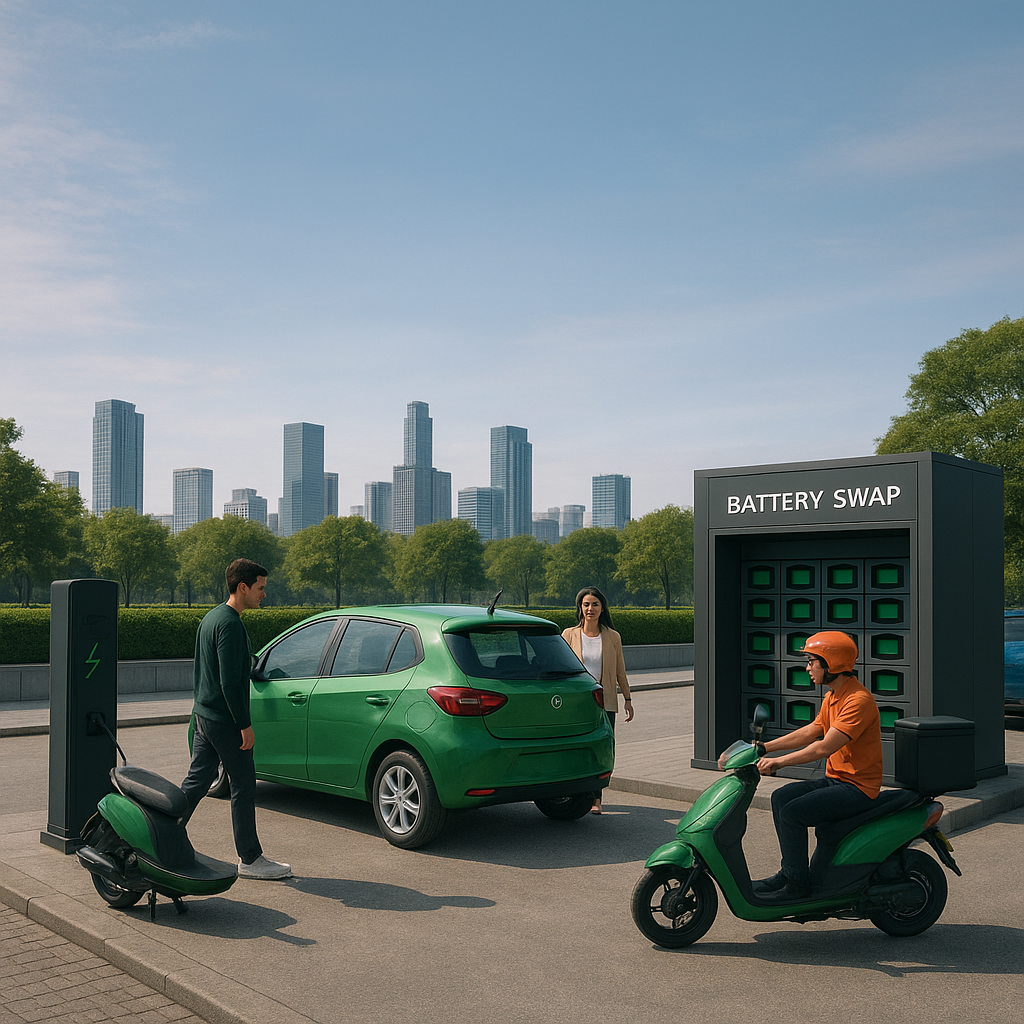
India’s roads are undergoing a transformation. They are gradually becoming quieter, cleaner and smarter. This shift is characterised by the move from the hum of petrol and diesel engines to the near-silent whir of electric vehicles (EVs). And what is fuelling this transformation is a new generation of EV start-ups and a supporting ecosystem.
There are three main reasons behind this shift to electric mobility in India: rising costs of fuel, an increasing awareness about environmental concerns and the government’s push for sustainable transport. Climate change is no longer a distant threat; it is present and looming large. India has committed to achieving net zero emissions by 2070, which is a tall claim but one which EV start-ups are viewing as a golden opportunity.
Two-wheeler innovators like Ather Energy, Ola Electric, and Hero Electric alongside four-wheeler disruptors like Pravaig Dynamics and Euler Motors, for commercial EVs, Indian start-ups are fast becoming a home-grown movement. The USP of these start-ups is that they are quick and adaptable. They experiment quickly, use modern design thinking, and assimilate cutting-edge technology to appeal to a tech-savvy generation. Components like AI-powered navigation, IoT-enabled battery management, and swappable batteries speak to the current generation who has the money power to opt for EVs.
However, this boom in EV start-ups isn’t possible without the support of a strong ecosystem around them. Vehicles are just a part of it; what is required are charging stations, battery manufacturing, recycling units, financing solutions, and policy support. While this is coming up rapidly, we are still a long way off from being an economy where EVs are the first choice, especially among the slightly older generation.
Companies like ChargeZone, Tata Power EZ Charge, and Statiq are working to set up fast-charging networks in cities and highways, especially Tier 2 cities. Similarly, Start-ups like Log9 Materials and Exide Energy are in the process of developing longer-lasting batteries and reducing charging times to minutes instead of hours. Finally, with EVs still being priced higher than petrol vehicles, several fintech companies and banks are exploring the creation of special EV loan products.
There is no doubt that the way forward is a gradual shift to EVs but it is also important to recognise that challenges remain. Commuters list range anxiety, patchy charging infrastructure and high battery costs as deterrents to opting for EVs.
What is exciting is that just a few years ago electric mobility was a unique concept. It was hard to imagine that within a decade, EV start-ups would be attracting massive investments and partnering with global players. If the current trends are an indication, then the Indian EV industry could be worth over $100 billion by 2030. This will transform not just how we travel but also how our cities look, sound, and breathe. The EV industry is here to stay and how soon the infrastructure develops will be a deciding factor in how much it takes over the Indian automobile sector.