
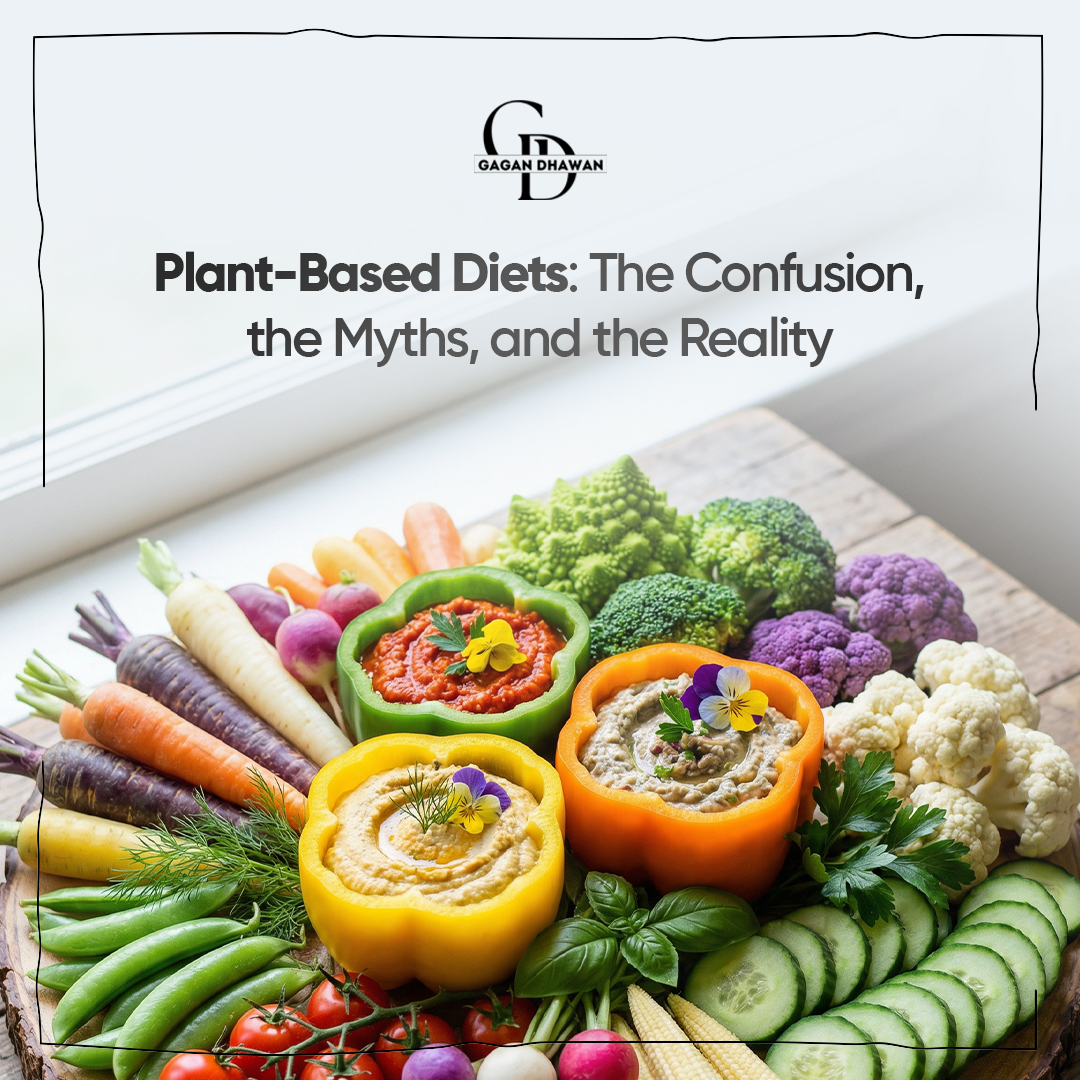
Have you noticed how confusing food has become lately? One day something is called healthy, the next day it is suddenly wrong. Someone swears by a diet because it worked for them, another warns you to stay away from it completely. In between all this advice, reels, articles, and opinions, most of us are just trying to answer a simple question. What should I eat so I feel good, stay healthy, and have enough energy to live my day well?
This confusion is exactly where plant based diet myths begin to take shape. Not because people want to mislead us, but because nutrition advice today often travels faster than understanding. Over time, these half truths turn into healthy eating myths, leaving people unsure, tired, and constantly second guessing their choices.
What I want to do here is slow things down. This is not about convincing anyone or taking extreme positions. It is about bringing clarity to the plant based nutrition truth, separating real insight from noise, and understanding what actually works in everyday life. If you have ever felt overwhelmed by vegan diet misconceptions or confused by conflicting food advice, this read is meant for you.
Why Food Myths Spread So Easily Today?
We live in an age of instant information. Unfortunately, instant information rarely allows room for context. A single headline or a fifteen second video cannot explain how nutrition works over time. As a result, plant based diet myths get repeated until they sound like facts.
Additionally, most people share advice based on personal experience, not long term understanding. Something worked for one person, so it must work for everyone. That assumption creates many healthy eating myths, especially around plant based living. This is why clarity matters more than trends.
Before we address specific misconceptions, it is important to define our terms clearly.
What We Mean by a Plant-Based Diet?
A plant based diet focuses on foods that come primarily from plants. This includes vegetables, fruits, whole grains, legumes, nuts, and seeds. The emphasis is on whole foods that are minimally processed.
It is important to pause here. A plant based diet is not automatically the same as a vegan lifestyle. Veganism often extends beyond food into ethical and lifestyle choices. Vegetarian diets may still include animal derived products like dairy or eggs. When we speak about plant based nutrition truth, we are speaking specifically about food choices centered around plants as the main source of nourishment.
Understanding this distinction helps us evaluate claims with intelligence instead of confusion.
Myth One A Plant-Based Diet Lacks Proper Nutrition
One of the most common vegan diet misconceptions is that plant based eating cannot meet nutritional needs. Protein is usually the first concern. In reality, legumes, lentils, beans, nuts, seeds, and whole grains provide ample protein when consumed with awareness.
Moreover, plant foods offer fibre, antioxidants, and micronutrients that many modern diets lack. The plant based nutrition truth is that nutrition depends on food quality and balance, not on whether food comes from animals or plants alone.
When planned thoughtfully, a plant based diet supports immunity, digestion, and mental clarity.
Myth Two Plant-Based Eating Is Expensive and Difficult
Another widely believed plant based diet myth is that it strains the wallet. In practice, whole grains, seasonal vegetables, lentils, and legumes are among the most affordable foods available. Costs rise when food becomes heavily processed, regardless of whether it is plant based or not.
Additionally, simplicity plays a role. Meals built around basic ingredients reduce both cost and decision fatigue. Many vegan diet facts show that affordability improves when people cook more and rely less on packaged alternatives.
Difficulty often comes from unfamiliarity, not from the diet itself.
Myth Three You Cannot Build Energy or Strength on a Plant-Based Diet
Energy is often misunderstood. Many people confuse processed carbohydrates with all carbohydrates. This leads to the belief that plant based diets make you weak.
The plant based nutrition truth is that unprocessed carbohydrates like fruits, legumes, and whole grains support sustained energy. Combined with plant proteins and healthy fats, they help the body recover, move, and function efficiently.
Several vegan diet facts now support strength building through plant based eating when calorie intake and nutrient balance are maintained.
Myth Four Plant-Based Diets Are All About Restriction
Restriction is another powerful word that fuels healthy eating myths. People imagine endless food rules and constant sacrifice. In reality, plant based eating expands variety rather than shrinking it.
Different cuisines across cultures have always relied heavily on plants. Spices, textures, and cooking methods create diversity. When people move past fear, they often discover abundance.
This shift in perspective quietly dismantles many plant based diet myths without confrontation.
The Impact Beyond the Plate
Food does more than nourish the body. It shapes how we feel emotionally and mentally. Many people who explore plant based eating report feeling lighter, calmer, and more connected to their choices.
This is not about moral superiority. It is about awareness. The plant based nutrition truth includes understanding how food affects the environment, animals, and long term health. When choices align with values, stress reduces naturally.
This alignment is often missing from discussions around vegan diet misconceptions, yet it plays a meaningful role.
Making the Shift Without Extremes
One of the biggest mistakes people make is trying to change everything overnight. Sustainable change happens gradually. Start by adding more plant foods, not by removing everything else at once.
Listen to your body. Observe how energy levels respond. Adjust without guilt. This approach prevents overwhelm and helps break free from healthy eating myths that promote all or nothing thinking.
Plant based eating is not a test. It is a learning process.
A Thought to Leave You With
Food is one of the few decisions we make every single day. Over time, these decisions quietly shape our health, mindset and resilience. Many plant based diet myths exist because we rush to judge instead of understand.
When we approach nutrition with curiosity, the plant based nutrition truth becomes easier to see. It is not about labels or perfection. It is about choosing foods that support a healthier body, a calmer mind, and a more conscious way of living.