
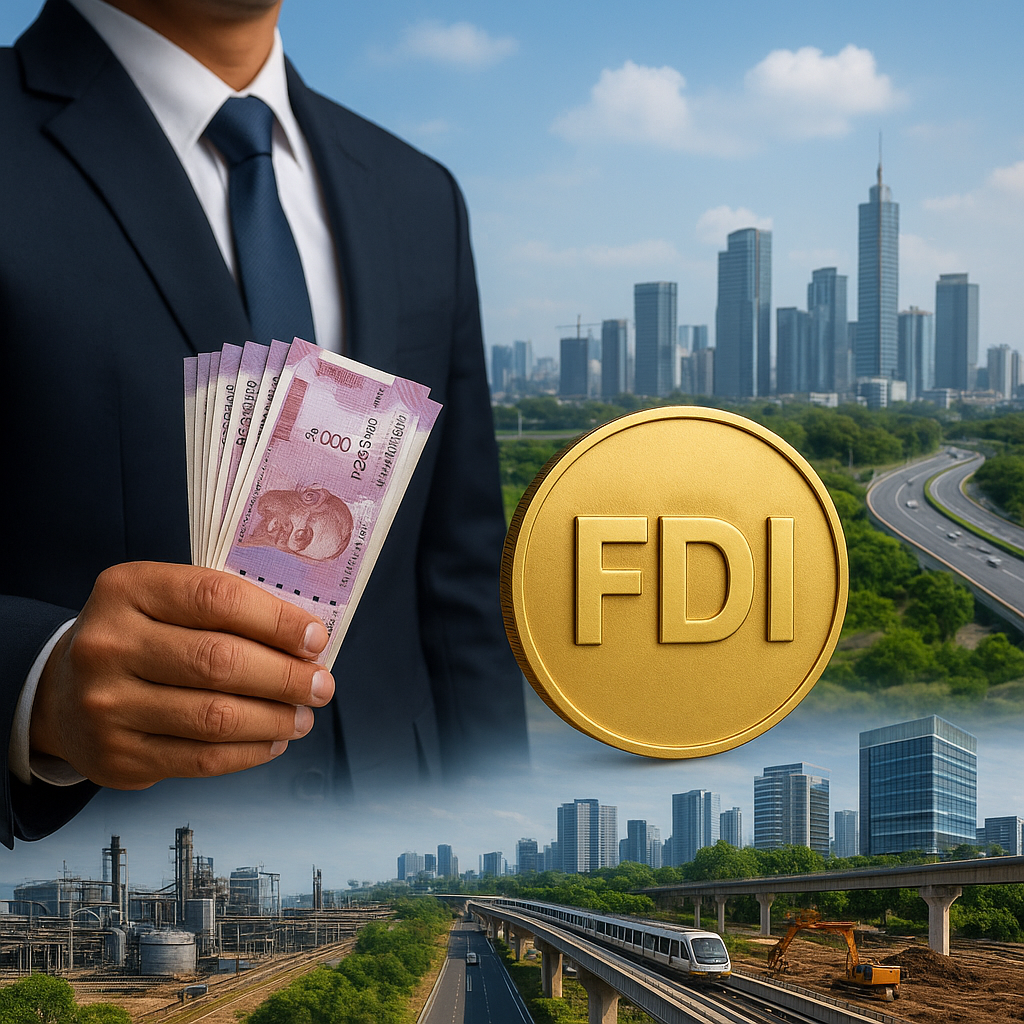
In the past few decades, Foreign Direct Investment (FDI) has become one of India’s most powerful engines of economic progress. It has quietly weaved itself into the fabric of daily life and national growth, becoming an integral part of what drives India’s economy.
But what does FDI actually mean for India’s economy?
In simple terms, FDI happens when companies based overseas invest their money into businesses and projects in India. This could be for building new factories, opening research centers or funding local start-ups. Apart from an infusion of capital, these investments also result in an infusion of fresh ideas, technology, and global expertise that help Indian industries thrive. There has been an exponential surge in FDI over the last 20 years, proof that international trust in India’s economy is growing.
FDI also stands out for its ability to create jobs and new opportunities. Look around you. International car manufacturers, tech giants, and pharmaceutical companies have set up operations in cities across India. Their presence doesn’t just result in new products in the Indian market; it also means thousands of new jobs for local talent. To give an example, recent investments by companies like Apple have led to India exporting more smartphones, boosting both employment and exports.
FDI also fuels India’s infrastructure boom, helping build roads, airports, smart cities thanks to foreign partnerships. This makes life easier for citizens and also helps Indian products reach global markets with greater ease and efficiency. Perhaps the most shining example is of India’s start-up ecosystem where foreign capital has powered the rise of innovative businesses in health, education, and technology.
Another huge advantage of FDI is the cutting-edge technologies it brings. When Tesla proposed building an electric vehicle and battery plant in India, it resulted in the transfer of expertise in the renewable energy sector. Similar collaborations in software, manufacturing, and financial services have helped raise the quality of goods and services produced in the country. Local companies are learning to compete on a global scale by upgrading their products and improving customer service.
The Indian government has recognized FDI’s importance and made several reforms to make investing easier and more attractive for international businesses. Today, 100% foreign ownership is allowed in many sectors, from insurance to technology, with simplified approval processes. FDI also helps India earn vital foreign currency, reduces trade deficits, and enhances our standing as a key export hub. India is now an exporter of iPhones, cars, and chemicals to several countries across the globe. The bottom line is that every dollar of foreign investment acts as a seed and as India continues to evolve, FDI shall remain a cornerstone of transformation.