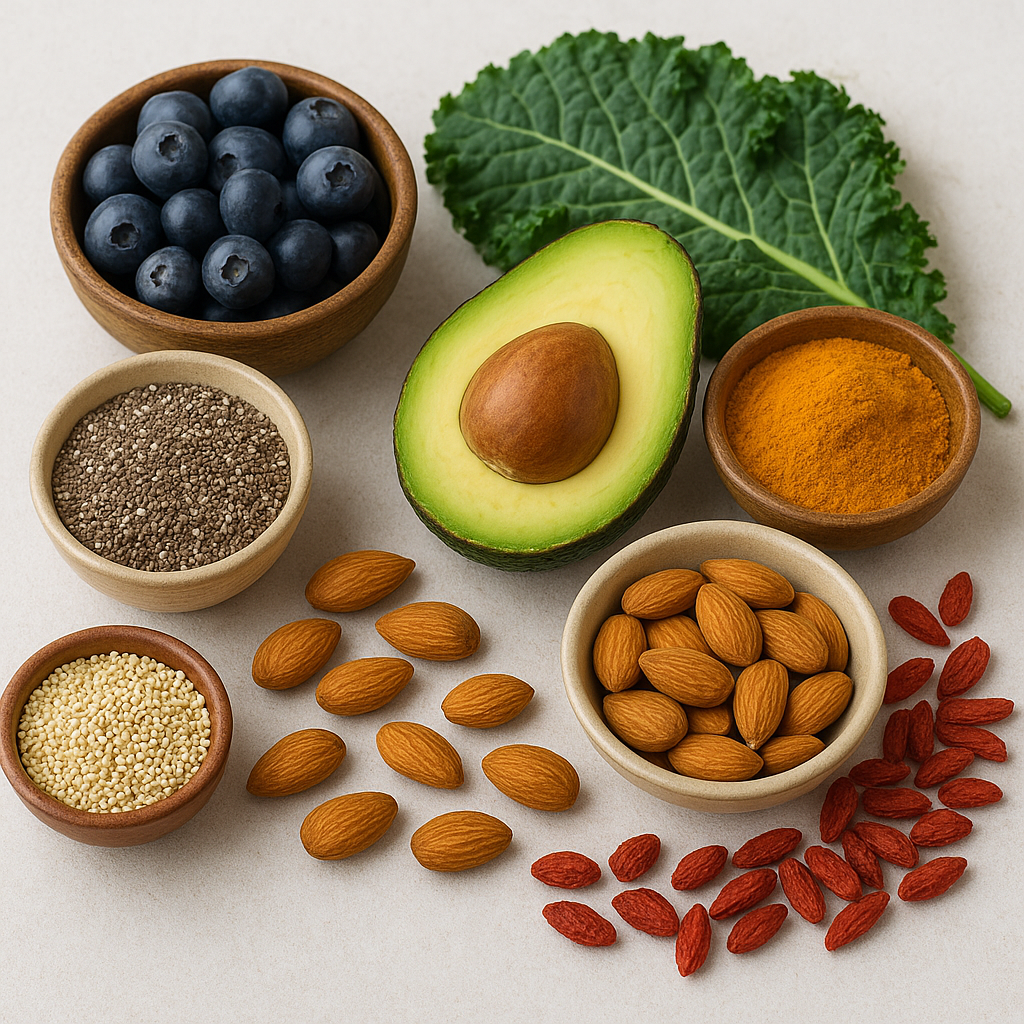
It is not uncommon to walk into grocery stores and seeing brightly labelled packets with words like “superfood” or “miracle health booster.” From chia seeds to kale, quinoa to goji berries, the list of so-called superfoods seems to grow every few months. The question is what makes these foods super and do they really deserve the label?
Did you know that the term superfood isn’t a scientific one? It’s just a catchy way to describe foods that are rich in vitamins, minerals, antioxidants and healthy fats. For instance, take blueberries with their rich antioxidants, spinach with its iron, or salmon with omega-3 fatty acids. The high nutritional value that these foods have, has led to them being attached with the word ‘super’.
Let’s take a look at some of the foods popularly known as superfoods.
- Blueberries help protect cells from damage.
- Chia seeds provide fiber, protein, and omega-3s in just a spoonful.
- Kale is loaded with vitamins A, C, and K.
- Quinoa is a complete protein, containing all nine essential amino acids.
- Avocado is full of healthy fats that support heart and brain function.
- Turmeric contains curcumin, known for its anti-inflammatory and healing properties.
- Almonds are rich in vitamin E, magnesium, and healthy fats for heart and skin health.
While including these foods in your diet can improve energy, immunity, and overall health, it is important to remember that no single food, irrespective of how packed they are in nutrients can act as a magic bullet for perfect health. If your diet is unbalanced, then eating kale daily isn’t going to help! True superpower of foods lies in combining them in a balanced way with other foods.
The term superfoods has a tendency to be used loosely. We all grew up hearing how an apple a day kept the doctor at bay and yet surprisingly you will seldom see apples in the list of superfoods. As a consumer, you need to shop intelligently and not leave out nutrient packed everyday foods like beans, oats, and carrots just because they aren’t termed superfoods.
Also keep in mind that clever marketing plays a huge role in classifying certain foods as superfoods. Companies often use the label superfood to charge higher prices, catering to the mind-set that the more expensive something is, the better it will be. Did you know that quinoa was once a staple in South America but has now shot up in global popularity and price as soon as it was labelled a superfood?
There is no doubt that some foods are more nutrient dense than others and including them in our diet has numerous benefits but we should be careful against opting for them just because they are the latest fad. Do remember that everyone has different nutrition needs and it is vital to create a balanced diet in accordance with individual needs. Superfoods aren’t magical in nature and should be used to supplement rather than replace other foods.