
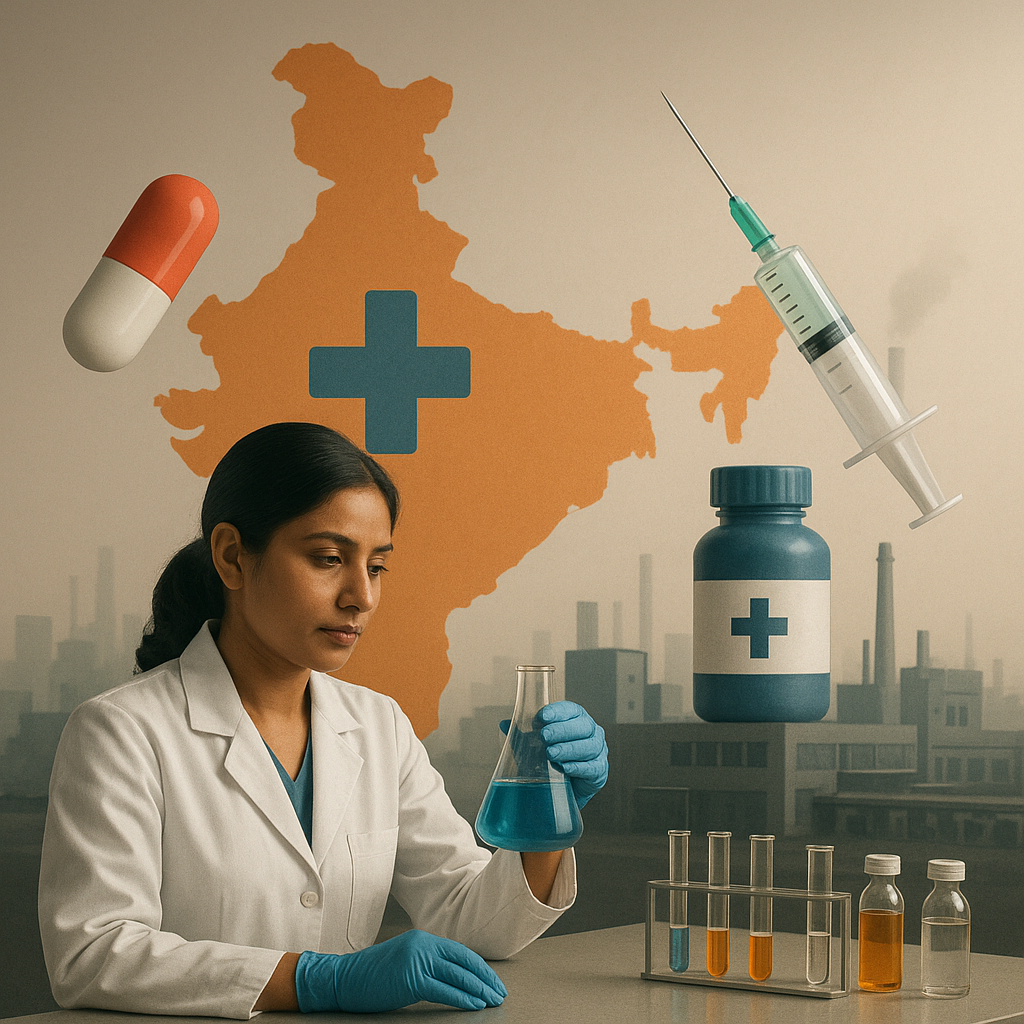
India is often called “the pharmacy of the world”—and for good reason. Blending innovation with cost-effective manufacturing, India supplies a huge share of the world’s essential medicines. In fact, nearly 20% of the world’s generic drugs come from India, reaching over 200 countries. From the United States to Africa, South America to Asia, millions of people rely every day on Indian-made medicines and vaccines.
What makes India’s pharmaceutical industry stand out is its winning formula– a combination of competitive pricing, strict adherence to international standards, and expertise in creating affordable versions of medicines as soon as patents expire. Indian factories hum with activity, many carrying approvals from global regulators like the USFDA, EMA, and WHO-GMP; the largest number of approvals outside the US. It’s no wonder that 4 out of every 10 generic drugs in the US are Indian in origin.
But India’s story doesn’t stop with generics. Its vaccine and biosimilar industries are also booming, with projections of $12 billion by 2025. During the COVID-19 pandemic, Indian companies like Serum Institute of India and Bharat Biotech became lifelines for the world, sending billions of doses across continents. From UNICEF to the World Health Organisation, global health programs continue to depend on Indian vaccines to save lives.
A large part of this growth has been fuelled by government support. Policies like the Production Linked Incentive (PLI) Scheme and faster regulatory clearances have helped exports grow by 9% in 2024–25, outperforming global averages. It is apparent that this sector is getting more ambitious, with Indian companies partnering with global pharma giants and investing heavily in Research and Development. Intensive research is ongoing to find specialty drugs for rampant diseases like cancer, diabetes, and autoimmune disorders, which impact billions of people across the world every year.
This shift from generics to cutting-edge innovation is most visible in India’s modern research hubs, especially in cities like Hyderabad, Bengaluru, and Mumbai. In these state-of-the-art laboratories, scientists are moving beyond simply replicating existing drugs and are instead focusing on developing new chemical entities, advanced biologics, and next-generation therapies. Increasingly, Indian pharma companies are also investing in artificial intelligence, big data, and biotechnology to accelerate drug discovery and reduce costs. These hubs are not just laboratories; they represent the future of India’s role in global healthcare.
India’s pharmaceutical journey is more than just an economic success; it’s a story of resilience, global collaboration, and bold vision. India stands tall as both a trusted partner and an emerging leader in the landscape of the global healthcare industry. In the next few decades, India’s pharmaceutical industry shall continue to play a vital role in not just supplying medicines but also in shaping the future of global healthcare.