
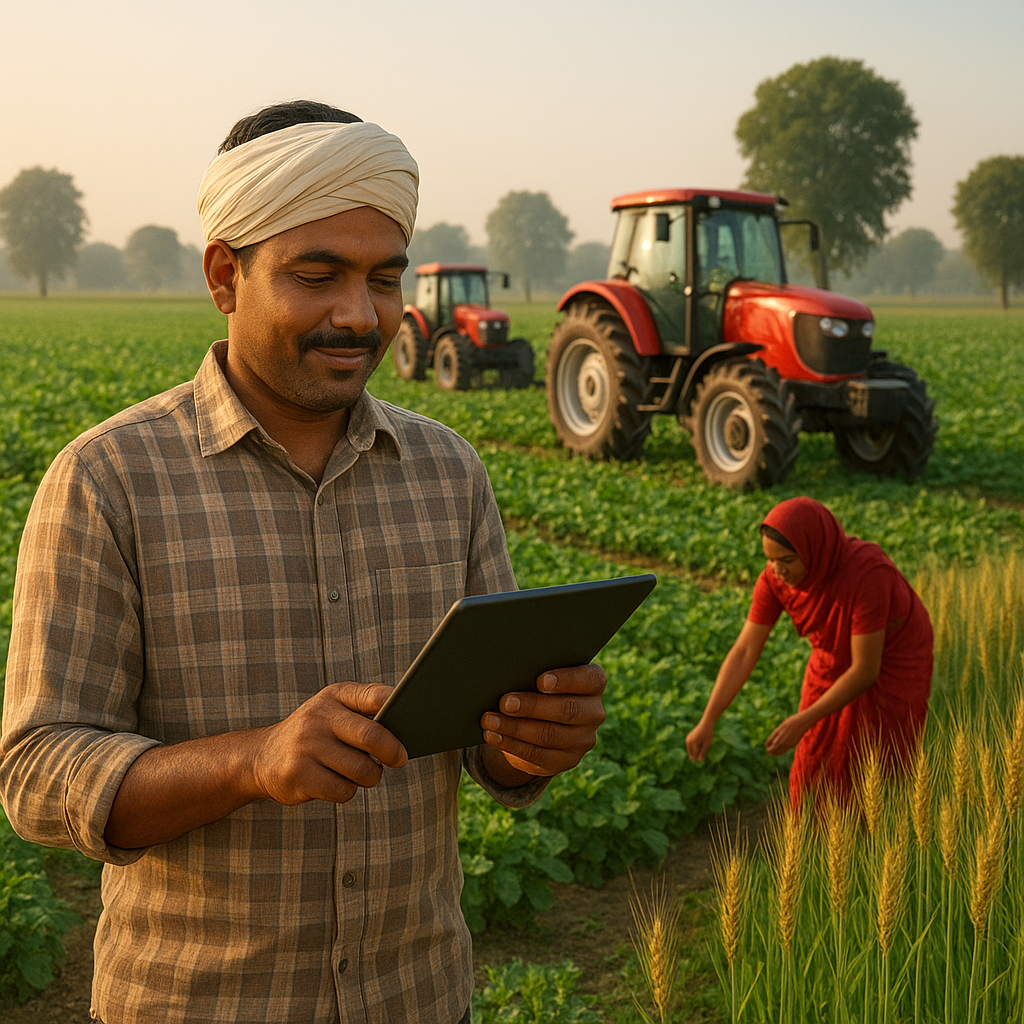
It is a well-known fact that India’s agriculture sector is not just the country’s oldest economic engine, but also the heartbeat of rural life. It is the invisible thread that connects farm to fork across millions of homes. Early morning, in any Indian village you will see fields alive with wheat, paddy, pulses, and vegetables, with farmers tending to their crops. Indian villages are often portrayed in movies and books but it’s important to remember that beyond these lush images, it is agriculture that quietly powers India’s economy in a myriad of ways.
In current times, approximately 60% of Indians are employed in the agricultural sector. This means that every grain of rice or piece of fruit at a city supermarket is the result of the collective work of families across the countryside. Those who believe farming to be an old-fashioned pursuit, will be surprised to learn that India’s green-and-gold revolution is increasingly tech-driven and entrepreneurial.
For instance, in regions like Punjab and Haryana, farmers are now using AI-powered mobile apps to check moisture sensors in the soil or monitor crop prices in real time. New irrigation techniques and mobile-based advice have resulted in even small farmers gaining access to knowledge and data which was once the domain of big agribusinesses.
Resilience has become the byword for Indian agriculture. Despite being battered by exceptionally heavy monsoons or unexpected lockdowns during Covid times, the sector has delivered rising harvests each year. Wheat and rice in particular have seen consistent record outputs. Recently, government programs like e-NAM (a digital marketplace), Kisan Rail (special trains for produce), and direct transfers to farmers’ accounts have helped farmers to tide over unexpected shocks. In fact, between 2020 and 2025, India’s government investment in agriculture grew more than five-fold, giving rise to a steady stream of new cold chains and food processing hubs, linking harvests with markets nationwide.
Over the years, we have seen the growing popularity of snacks which are made in India, most of which are made from local crops like millets or makhana. Over the past two years, states like Bihar have fostered makhana boards to boost exports, while support programs in the fisheries and livestock sectors have brought prosperity to these communities. India also exports mangoes, spices, and cotton to dozens of countries; proof that agriculture still drives a major part of India’s international trade portfolio.
India’s agricultural value lies not just in numbers but in its stories. Women’s cooperatives in Maharashtra expanded fruit and vegetable delivery, a drought-affected farmer in Rajasthan switched to climate-smart crops and a new generation of students returned to family lands with plans of launching agri-tech start-ups. Each of these examples reveals a sector that stands at the crossroads of tradition and transformation.
In the years ahead, Indian farms may look different but they shall remain central to the growth and sustenance of the Indian economy.