The world before the Covid-19 pandemic seems alien from the one we are now living in. Within the span of a few months, the familiar was replaced with the strange and all of us had no choice but to accept it.
One of the most revolutionary changes brought about by the pandemic was how the workspace was viewed. For years we have believed that a job entailed going to office and following the 9-5 workday; something we all grew up watching our parents do. The work environment today is far more flexible and fluid, focusing a lot of digital tools and emphasising things like work-life balance, creativity and mental well-being.
When work shifted to remote mode during the pandemic, the apprehension was that productivity shall crash. The fear was that people will get lazy, shirk their work and find ways to avoid being accountable during office hours. However, to the contrary, people soon realised that working from home was a great option. Productivity increased because most people worked better without the stress of the daily commute. Once the crises passed, a large number of organisations adopted the hybrid model- where employees were given the option of working from home 2-3 days a week.
The focus today is on getting the job done rather than just clocking in a certain number of hours in office. Sitting at a desk for hours might not necessarily give the desired output. The young generation of professionals is now looking at options which add meaning and substance to their work life, rather than just an end-of-the-month pay check.
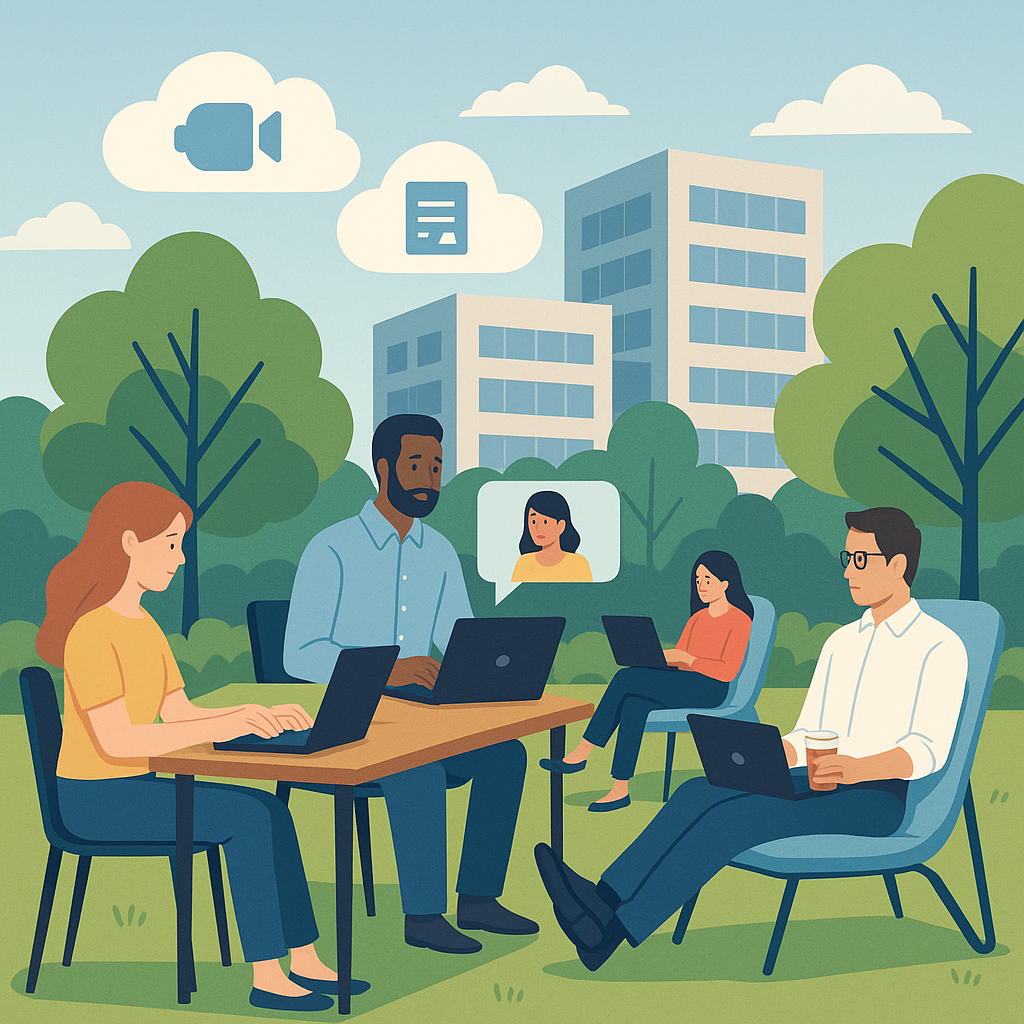
This shift in the post-pandemic work space can be seen in the kind of work spaces that have come up too. Outdoor working areas, open offices and co-working spaces have become the norm rather than the exception. Boardrooms have been replaced by Zoom meetings. This shift has also been possible because of the technological advancements that the past decade has witnessed. Teams don’t need to be in the same city or office or even the same time zone to be connected. Video calls and cloud tools have made the distant seem closer.
The younger generation is also laying emphasis on things like work-life balance and avoiding a burnout. Organisations across the globe are recognising and addressing these needs by offering a more flexible work environment where it’s okay to switch off after work instead of being on call 24×7. Let’s face it- a workspace that is healthier and happier will automatically have higher productivity levels than one which still believes in conventional values like sitting at a desk for hours’ even if there’s no work.
Innovation, creativity and flexibility are the keywords of the new workspace; a shift that has changed the way we look at a job. An internet connection, a phone and a laptop has made it possible for the workspace to be pretty much anywhere. And it’s here to stay.